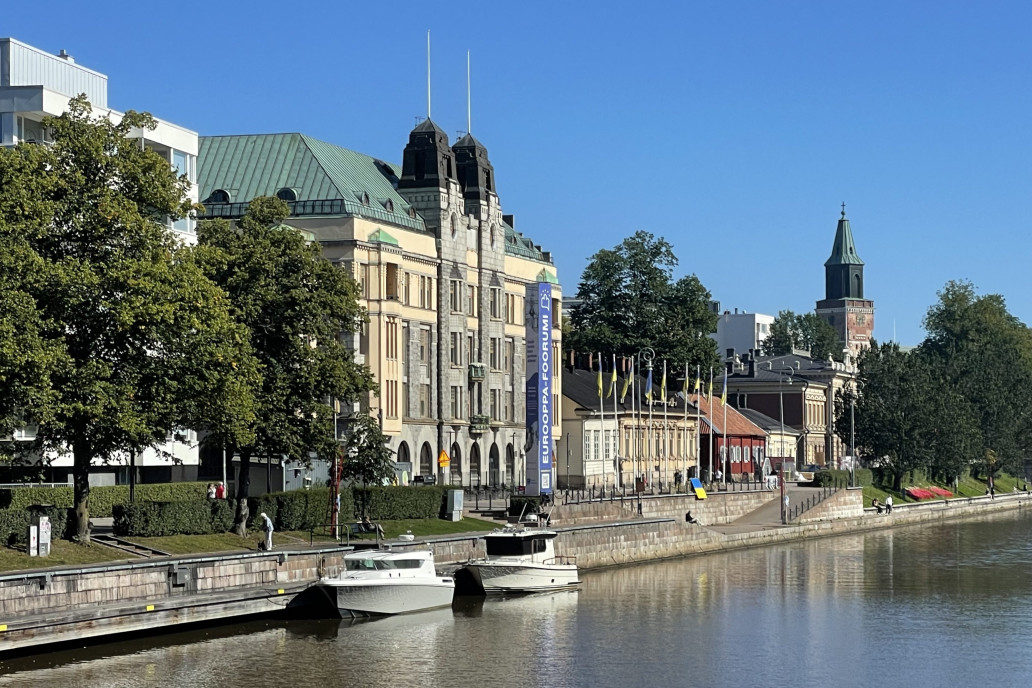
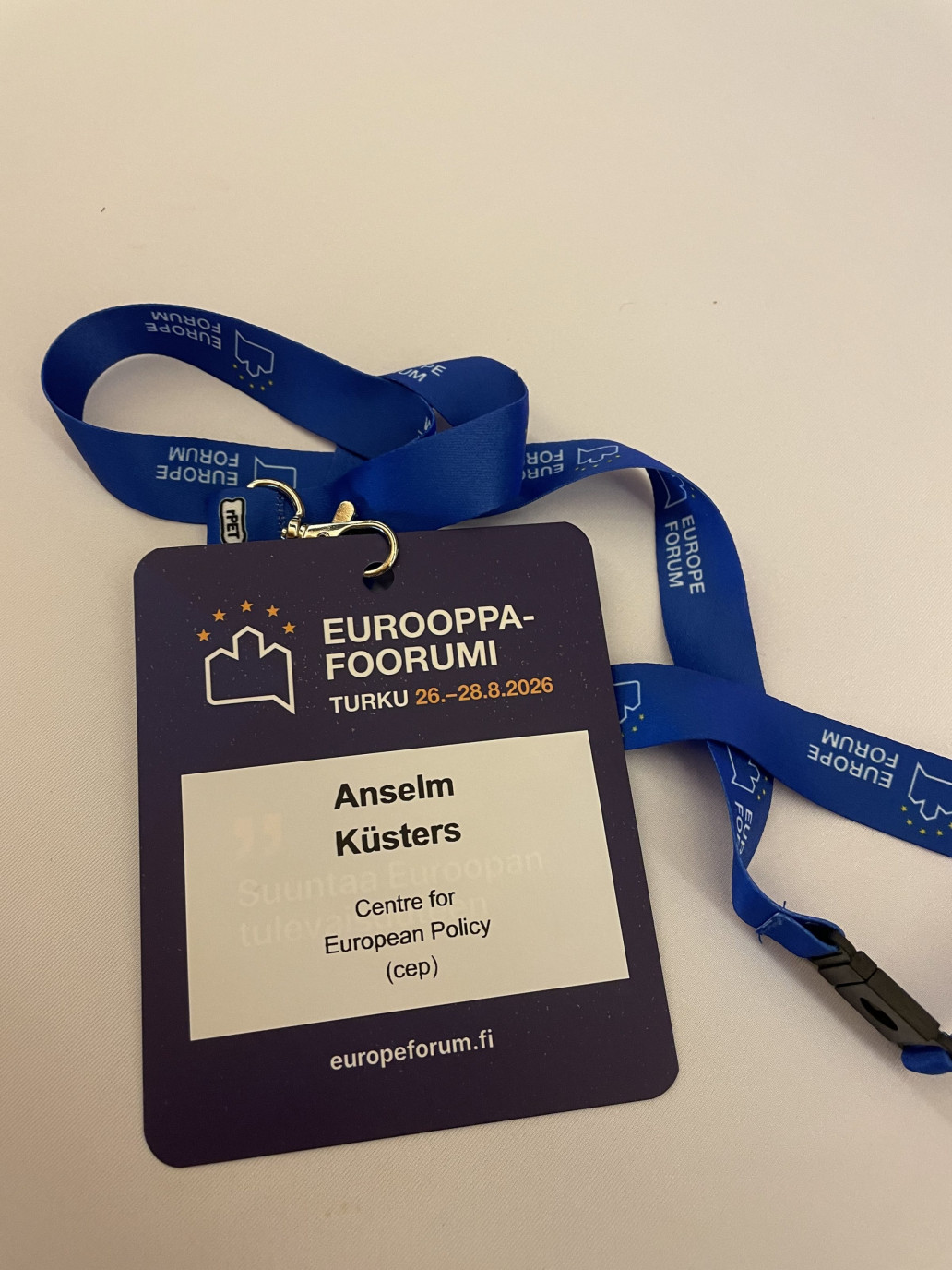
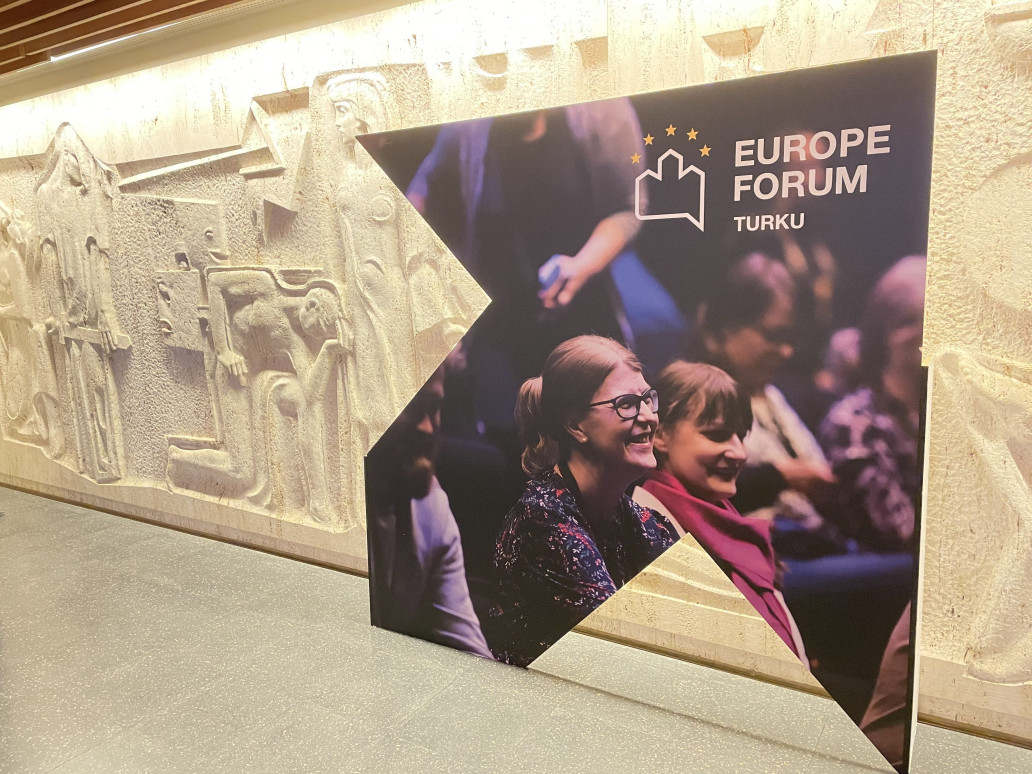
The train journey from Helsinki to Turku takes around two hours. Throughout the year, it regularly carries tourists to attractions such as the city’s castle and the Sibelius Museum. In the last week of August, however, it carries EU practitioners to Turku’s Europe Forum. This year marked the ninth annual event, which cep’s new Finnish network hub, cep Nordic Countries, was able to attend for the first time. The three-day programme took place at Turku City Theatre under the motto “Values, Innovation and Security as the Foundation for the EU’s Success”.
Anyone counting the sessions would conclude that security was the main topic. Prime Minister Petteri Orpo opened the event by setting out three priorities for EU policy, each underpinned by the same rationale: enlargement as the most effective security policy available; faster decision-making through qualified majority voting, advocated for practical rather than ideological reasons; and removing the remaining barriers to the single market in services, energy and capital, as these weaken the Union’s defence capabilities. Significantly, he suggested that the funding of defence on the eastern flank should also be the responsibility of the European Union rather than only individual states.
The following conference report does not aim to summarise the programme in its entirety, which featured dozens of parallel sessions delivered in Finnish, Swedish, and English. It also omits the interesting topics of maritime policy, health, and social affairs (more on the Finnish maritime industry, particularly its icebreakers, will be covered in a future essay for “Common Ground of Europe”). Instead, I would like to share a key observation that I made during my three-day stay in Turku: Notably, almost every economic argument with which we are familiar from the typical Brussels discourse was cloaked in security rhetoric in one way or another here – let us call it “flank realism”. Can the rest of Europe learn from this mental model?
European policy from the perspective of the eastern flank
On the opening day, the national party debate demonstrated the extent to which this Finnish mindset has already become widespread, and the lessons that German observers like me could learn from it. Although the representatives of the four largest parties in the Finnish parliament disagreed on the pace and funding, they all considered the shift from a trade union to a defence union to be the most important issue. Tellingly, two days later, Li Andersson, a Member of the European Parliament and Chair of the Left Alliance, called for increased European defence spending, too. She argued that Ukraine was fighting a regime that was hostile to human rights and democracy, and she drew a parallel with the global rise of authoritarianism. The fact that Finnish representatives from the left wing of the European Parliament and the Finnish centre-right party agree on rearmament indicates a clear underlying threat assessment.
“Flank realism” also leads to a distinct perspective on institutional power. The panellists repeatedly returned to the constraints arising from Finland’s small size. Finland adheres to the rules because it profits from a rule-based, free trading arrangement, whereas larger Member States can sometimes achieve European results at the bilateral level. One example cited was the weakening of the 2035 CO₂ fleet target for passenger cars, which the Commission proposed in December 2025 following sustained pressure from Germany and Italy. This replaced the de facto ban with a 90 per cent reduction target. In emergencies, participants seemed to agree, it might be sensible to suspend rules uniformly. However, this should not be done first for those with the strongest industrial lobby.
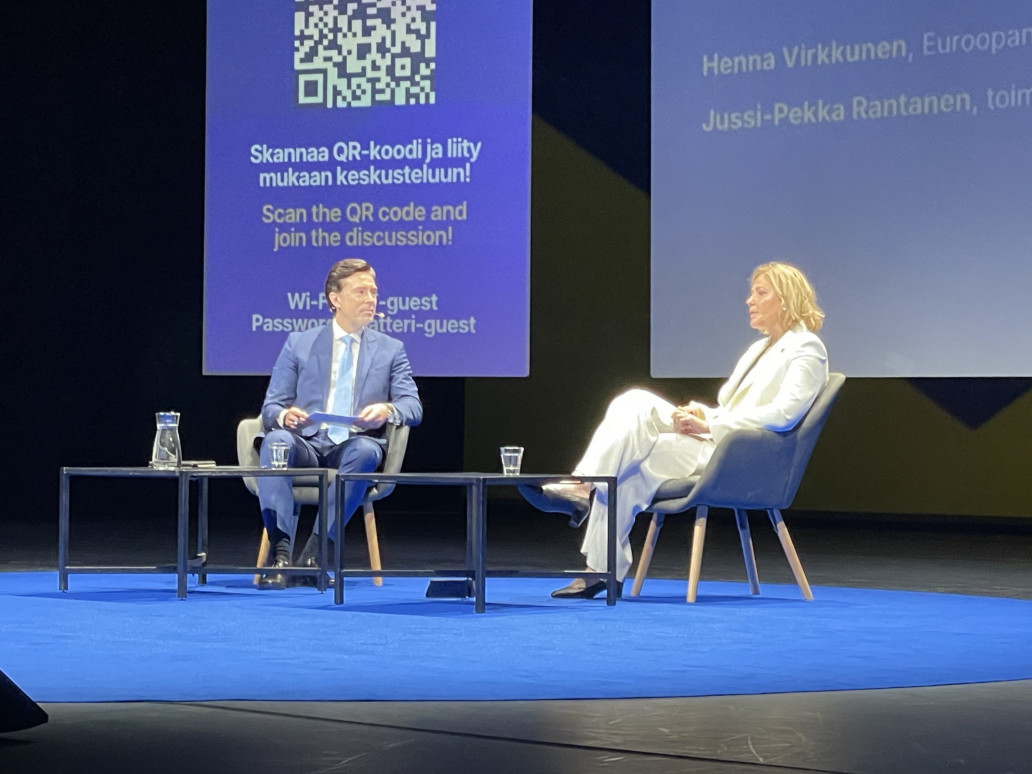
Events outside the theatre kept pace with the discussion inside: On 27 August, halfway through the forum, reports emerged of a letter from late July in which several northern European Commissioners urged Ursula von der Leyen to appoint a high-level coordinator for the eastern flank and to convene the College of Commissioners in a Baltic state that autumn. From this perspective, the title of the Finnish Commissioner, Henna Virkkunen – “Executive Vice-President for Technological Sovereignty, Security and Democracy” – suddenly reads less like a typical Brussels compromise and more like an accurate reflection of the Finnish agenda. (As an aside, correctly listing Virkkunen’s full title was also part of the pub quiz on the first evening, and I am glad to report that cep Nordic Countries passed this test.)
Interdependence of economic systems, applied to bottlenecks
The ordoliberal argument, advanced by Walter Eucken and other early proponents of the German social market economy, that the systems of an economy are interrelated and that a defect in one system manifests itself as a defect in the others was never intended to cover military affairs. However, as I discovered from listening to the panel discussions on defence at the Turku meetings, this argument can nevertheless be extended to cover military affairs, too: For instance, the panellists warned against being impressed by individual drones, instead pointing to Ukraine’s holistic management system which takes feedback from the front line into account and translates it into procurement measures and updated software within a matter of weeks. One speaker noted that defence equipment no longer has a service life of thirty years, but instead becomes obsolete within three or four years, like consumer electronics, which disrupts typical European production planning and tendering practices.
According to this interpretation, the limiting factor in developing Europe’s defence capabilities is not just money. Europe faces a shortage of procurement officers, drone and AI engineers, and physical access to test sites, all of which are limiting factors – in addition to a legal environment that is often described as overly complex and full of uncertainties. A series of interviews with founders of European defence companies that I read during my stay in Turku came to the same conclusion from a business perspective: For example, an operator seeking to book Germany’s WTD 91 – the largest fully instrumented ground firing range in Western Europe – was offered a slot in the fourth quarter of 2029. By then, the product will have changed beyond recognition.
The extent to which Europe should strive for technological self-sufficiency in such a geo-politically challenging climate was discussed in the various technology panels at the Europe Forum. For example, Finnish MEP Aura Salla highlighted vulnerabilities across the entire AI stack, whereas Robert Torvelainen from the Confederation of Finnish Industries claimed that Europe did not need to rebuild every layer from scratch, but rather required sufficient domestic capacity in order to negotiate and make choices. In several discussions, ASML was cited as the prime example of such a European “chokepoint”.
The Commission’s Technology Sovereignty Package from June, the centrepieces of which are the “Chips Act 2.0” and the “Cloud and AI Development Act”, follows this reasoning. In her interview in Turku, Virkkunen outlined the four levels of cloud sovereignty envisioned by the package and argued that the size of the European market gives the Union bargaining power vis-à-vis the US hyper-scalers. Still, the Commission itself estimates that only around 1 per cent of public services in Europe would require the strictest level. The panel on the digital euro showcased a similar thinking: According to Tuomas Välimäki, a Member of the Board of the Bank of Finland, the importance of a public payment network lies in the fact that retail payments are currently processed via a small number of dominant, non-European card infrastructure providers, rather than because private banks need a public competitor. The ECB anticipates a twelve-month pilot project starting in the second half of 2027, with a possible first issue in 2029. While a US “kill switch” might seem unlikely in many fields such as payments; a storm, a power cut, or a sanctions dispute are not.
In this context, two observations are worth highlighting. Firstly, many participants emphasised that a “Build with Europe” formula would be a more realistic alternative to the frequently “Made in Europe” slogan, as it distinguishes between critical and merely inconvenient dependencies and opens room for transatlantic cooperation. Secondly, politicians such as Aura Salla invoked the security aspect to also call for deregulation, citing specifically the GDPR as an ongoing legal obstacle.
Political implications
“Flank realism” should be given more consideration in European policy cycles, particularly when it converts a threat analysis into a defined constraint and proposes specific measures to address those constraints (rather than simply requesting subsidies). The debates in Turku suggest three recommendations for EU policymakers.
Firstly, the Commission (and the Member States) should recognise testing capabilities, ranging from AI models to dual-use defence technology, as critical infrastructure. Secondly, during ongoing negotiations on the tech sovereignty package, the Council and Parliament should define the upper sovereignty levels of the Cloud and AI Development Act rather narrowly. Levels three and four should apply only to defined critical workloads, and requirements for portability and open-source procurement should be in place, alongside a review clause to ensure that a sovereignty scale does not lead to general market foreclosure. Thirdly, Member States should commit to a speedy but phased European integration process, with reversible interim statuses. Prior to full membership, candidate countries could already engage in sectoral integration in the areas of energy, transport, and the single market. The Copenhagen criteria must remain non-negotiable, and Russia must not be granted a proxy right of veto.
Overall, three days of discussion in Turku alter the perspective one brings from Berlin or Brussels. Here, the concept of the eastern flank provides a vantage point from which to assess competitiveness, technology, and European integration. In my opinion, Finnish thinking helps us to envisage a form of sovereignty that is neither naïve nor closed off to the world, defined as the ability to choose rather than the ambition to stand alone. Tellingly, on the final day, a panel discussion on European identity centred on the concept of value-based realism. In light of the heated European budget negotiations, one might ask whether this framework will withstand budgetary constraints. And would it remain binding if the geopolitical environment were to deteriorate further? While nobody knows the answer to these questions yet, the discussions in Turku showed that not all constraints on European sovereignty are financial, but also institutional and legal, which complicates matters. What is clear is this: The world of yesterday is not coming back, and European countries on the eastern flank have long since decided to plan accordingly. The rest of Europe should take note.

Copyright Pictures: Private picutres, Anselm Küsters.