
The former Italian Prime Minister has become a leading figure in European politics thanks to his report on the future of the single market: Enrico Letta discusses Europe’s political and economic challenges in an interview with the Scientific Director of the Centro Politiche Europee, Prof. Dr Andrea De Petris.
Mr Letta, in your report you propose the introduction of a fifth fundamental freedom to cover research, innovation, data, skills and knowledge. Why is this so important? Would the European treaties have to be amended to achieve this?
The introduction of this ‘fifth freedom’ is absolutely key because the four traditional freedoms – namely the free movement of goods, services, people and capital – can no longer cope with the complexity of the European and global economy. When the Single Market was established more than thirty years ago, these four categories effectively covered all factors of production and all products traded within the Single Market. This is no longer the case today. In recent decades, digital and technological factors have begun to take on an increasingly important role in the creation of economic and social value. Nevertheless, the factors that enable innovation have remained at the periphery of the Single Market framework resulting in a proliferation of barriers to the free movement of goods at European level. This fragmentation leaves us at a disadvantage in terms of growth and innovation and thus poses a direct threat to Europe’s security and strategic autonomy. Implementing the ‘fifth freedom’ would make it possible to address all these critical issues without the need to revise the European treaties. Title XIX of the TFEU (Treaty on the Functioning of the European Union) provides a solid legal basis for such measures.
Your proposal for a virtual 28th regime to promote trade and business activity and overcome the barriers posed by the 27 national trade and tax systems would certainly give the Single Market a significant boost. But how will you overcome opposition from the 27 Member States? They are unlikely to want to give up their national systems.
The beauty of the 28th regime lies in the fact that it does not oblige Member States to give up their national systems. The proposal involves an optional regime that would complement national systems without replacing them. I am convinced that this pragmatic approach, which offers an additional option without infringing on the prerogatives of the Member States, is precisely what is needed to ensure that the proposal is feasible. However, I am also convinced that a well-designed 28th regime could, over time, gain acceptance from both governments and businesses and thus establish itself as a benchmark system.
Mario Draghi recently called for “pragmatic federalism” to turn the EU into a genuine geopolitical power. In this context, the question arises as to how bilateral agreements between individual Member States should be assessed. Do they really contribute to the development of the Union, or could they become an obstacle to a genuine federal dimension in Europe?
This depends largely on the nature of the bilateral agreements. Under the right conditions, they could give new impetus to the European project and play an entirely positive role. The framework of the World Trade Organisation (WTO) offers a good example of how bilateral agreements can coexist perfectly within a multilateral framework. The WTO provides a set of rules binding on all member states, but also allows for the conclusion of bilateral or regional agreements between countries wishing to deepen their economic integration. This approach has proven successful, as the bilateral agreements have not undermined the common regulatory framework but have in fact served as its basis. With the appropriate adjustments, this is a model that can also apply in Europe.
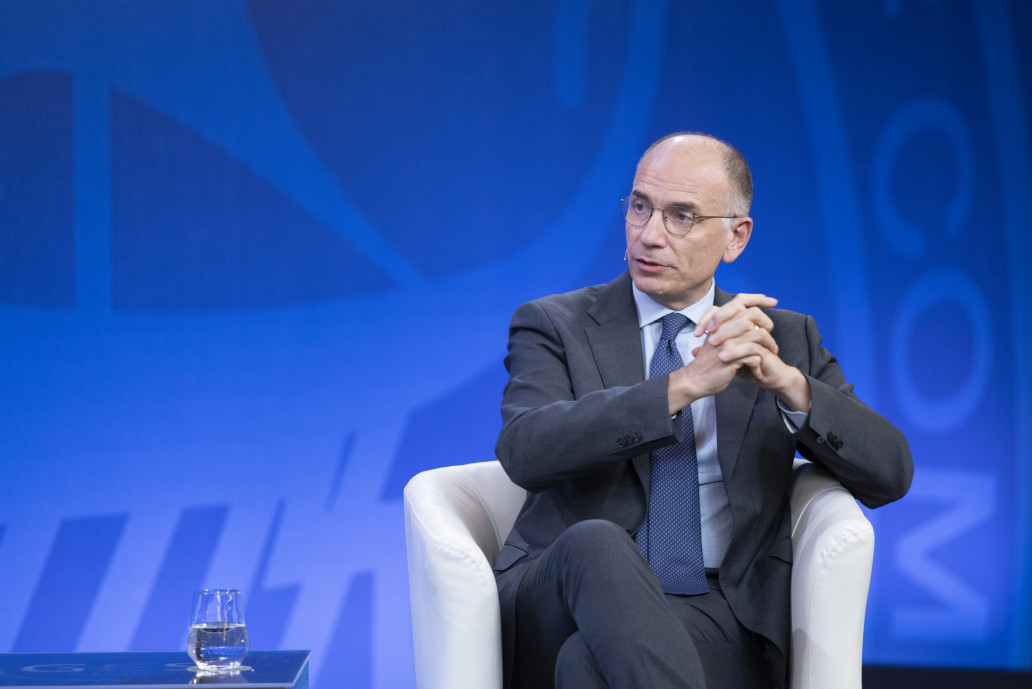
‘When we talk about “digital sovereignty”, we mean Europe’s ability to implement its own “Made in the EU” solutions,’ says Enrico Letta in an interview with cep.
With the agreement signed in Rome at the start of the year, Italy and Germany are establishing what could be a new and strong partnership. There is talk of increased cooperation in strategic areas such as defence, artificial intelligence and space exploration. What implications does this agreement have for the process of European integration? Has Italy now replaced France as Germany’s privileged partner? And how might this affect France’s influence at European level?
As already mentioned, bilateral agreements can provide a significant boost to the European integration process. This is how I would interpret the agreement signed between Italy and Germany, particularly as it covers various areas in which a deeper European dimension is highly desirable but has yet to be established. However, I would not view this agreement as competing with the historic relations between France and Germany. In fact, in my opinion, there is considerable scope for strengthening trilateral cooperation between Italy, France and Germany. In addition to the agreement signed in January of this year, Italy signed the Quirinal Treaty with France in 2021 and an action plan with Germany in 2023. The institutional framework for promoting dialogue is therefore in place. There also appears to be a willingness to establish a group of countries that takes a leading role on strategic economic issues – starting with financial matters.
One of the objectives you strongly recommended to the EU, and which appears to have been adopted, is the removal of regulatory barriers to growth. Is there a risk that this deregulation could lead to a gradual shift away from the fight against climate change, as set out in the 2019 Green Deal? How can both objectives be reconciled without sacrificing one of them?
I have highlighted two key points on this issue in my report. Firstly, the green transition is a strategic objective of the European Union, and we cannot afford any backward steps. The second point is that the best way to simplify regulation is through European integration which facilitates the transition from a confusing patchwork of 27 national provisions to a single European provision. If both of these aspects are taken into account, they offer a concrete way of combining simplification with climate protection.
Given the slow progress on the Digital Networks Act (DNA), what specific policy measures do you believe EU institutions should take to achieve the consolidation and modernisation that you are calling for in the European telecommunications sector?
With the DNA, the Commission has put forward an ambitious and structured reform of the telecommunications sector. Several points merit in-depth discussion, but the direction must be clear: the DNA has to be adopted swiftly and without weakening its most strategically important aspects. The key to modernising the sector, however, lies in a comprehensive approach. The European Union must therefore work simultaneously on the Digital Networks Act, the Cybersecurity Act 2.0 and the revision of the Merger Regulation. In doing so, it must ensure that these three pieces of legislation are aligned in their approach and their timetable for adoption. Otherwise, we run the risk of ending up with an incomplete
or even contradictory legal framework. And this is precisely where the biggest political obstacle lies today. Whilst the Heads of State and Government of the EU countries appear to be convinced of the need for structural reform of the telecommunications sector, they must personally take charge of the matter to ensure that it is dealt with in a coherent manner. If, on the other hand, they leave the work on the various pieces of legislation to different specialist bodies, there is a risk that the final result will fall far short of expectations and fail to justify the efforts made.
At present, the debate on “digital sovereignty” dominates European digital policy. At the same time, in your report on the Single Market, you criticise the fragmentation of European markets and call for greater integration. To what extent will European sovereignty depend on a digital Single Market in the future?
In many areas, the European Union is currently entirely dependent on technology solutions developed abroad. When we speak of “digital sovereignty”, we mean Europe’s ability to deploy its own “Made in the EU” options if there are no credible alternatives to the products and services offered by the US or Chinese giants. However, European digital solutions can only develop if they have a European digital Single Market at their disposal. In this sense, establishing such a market is not only a matter of economic growth, but also of digital sovereignty and security. The proposal for a “fifth freedom” of the Single Market takes us firmly in this direction and highlights the fact that actually implementing this freedom is crucial for defending the values and interests of the European Union.
This interview is also available in German.
Copyright Pictures: @Enrico Letta